
Operator Hypotheses #4: Flux
Testing how early data custody decisions constrain GTM strategy

Started: January 2026 (Month 29 post-seed)
Seed: $5.95M (August 2, 2023)
Investors: Glasswing Ventures (lead), Runtime Ventures, True Ventures
Final Check: January 2027 (Month 41)
About This Series
Operator Hypotheses examines whether early execution forks in startups are predictable from public signals. Each entry follows one company for 12 months to test whether its trajectory aligns with structural constraints identified months—or years—earlier.
Pattern #4 looks at a compound fork inside AI developer tools:
How an early data custody decision quietly constrains GTM strategy long before the team realizes it.
See Pattern #0 for the full framework.
The Bottleneck That Moved
By 2025, AI coding assistance had become standard. GitHub’s research showed that developers in controlled studies completed tasks 55% faster with AI assistance.¹ Tens of millions of developers encountered AI-augmented workflows through GitHub, IDE integrations, and internal rollouts.
Velocity increased everywhere.
But understanding did not.
Code volume surged. Pull requests multiplied. Engineering leaders suddenly faced codebases evolving faster than they could read them, let alone reason about architectural drift, risk, or quality.
Flux positioned itself precisely at this new constraint:
AI-native engineering intelligence for leaders managing AI-accelerated codebases.
Somewhere between Month 9 and Month 24, two quiet decisions shaped their trajectory. The first was a conscious choice made inside early enterprise deals. The second wasn’t a choice at all - it was a consequence that closed off an entire GTM path without anyone needing to say “no.”
Pattern #4 asks whether you can see that happening from the outside.
Why Flux Is the Right Company to Study
When AI collapsed the bottleneck on code generation, it created a new one:
leadership visibility.
Teams could ship faster, but leaders could no longer keep up with what was being shipped.
GitClear’s 2024 code analysis found that AI-generated code exhibited 2–3x more duplication than human-written code.² Architectural complexity rose. Review throughput lagged behind generation throughput.
Flux does not sell “AI coding assistance.” It sells understanding to the people accountable for code quality and system stability.
That focus makes the founding team’s background relevant:
Ted Julian, CEO: four enterprise software exits (IBM, Tektronix, Symantec) and SVP Product at Devo through Series E
Adrianna Gugel, CPO: repeated 0→1 product builder
Aaron Beals, CTO: engineering leader in enterprise SaaS
This is a team built to sell to VP Engineering and CTO buyers.
And the absence is just as telling:
no DevRel DNA.
No community builders. No open-source maintainers. No developer evangelists.
That gap becomes important once the architectural constraint shows up.
Where the Fork Quietly Appeared
We can’t see Flux’s internal discussions. But we can reconstruct the likely dynamics from standard enterprise infosec patterns and today’s product surface.
This reconstruction is based on typical enterprise sequences—nothing here is insider knowledge.
Imagine the team around Month 10.
The core analysis engine works. Prospects are interested. Enterprise buyers run early pilots. Then security reviews begin, and the same set of questions appears in nearly every devtools sale that touches source code:
Where does our code get analyzed?
Does anyone outside our organization see it?
Does your AI learn from our patterns?
Do improvements trained on our data benefit your other customers?
And here is the fork.
Path A: Cross-Customer Learning
AI improves for everyone as usage grows
True network effects
Strong free-tier economics
Natural path to Product-Led Growth (PLG)
Path B: Customer-Siloed Analysis
No cross-learning
Every customer isolated
AI does not benefit from aggregate patterns
Free tier becomes expensive and non-strategic
Shifts the company toward enterprise motion
Option A creates a compounding product.
Option B creates a compliant one.
And in early enterprise cycles, compliance usually wins.
Once Flux committed to strict isolation (if they did), the consequences wouldn’t show up for months, but they would show up.
What the Outside Shows at Month 29
We cannot see Flux’s data flows.
But we can see enough to infer which side of the fork they likely landed on.
1. The sandbox uses demo data, not real repositories
https://sandbox.trial1.askflux.ai
A polished, frictionless demo—but not a self-serve trial.
2. No self-serve onboarding path
There is no “Sign up → Connect repo → Start analyzing” flow.
3. Messaging reinforces isolation
“Your repo.” “Your codebase.”
No language about models improving across customers.
4. The EULA allows aggregation—but the product doesn’t show it
“Company reserves the right to use data and data analytics to improve the Services…”³
Legal permission ≠ architectural reality.
No public evidence this is happening.
5. The persona is enterprise leadership
VP Eng, CTO, engineering managers - not developers.
6. The demo CTA exists but is hidden
https://askflux.ai/requestdemo
Present, but not surfaced as a primary motion.
Inference: Customer-siloed architecture is the most likely explanation.
Confidence: 60% (based on product and GTM signals, not internal proof).
Why This Fork Collapses PLG
If Flux chose siloed analysis, another fork resolves itself automatically.
PLG works only if:
The product improves as more people use it (network effects), or
Free users cost almost nothing
Siloed analysis has neither.
Every repo analyzed is compute-heavy.
There is no shared learning.
No network effect offsets the cost.
You can offer a demo.
You cannot offer a meaningful free tier with real code.
The product can feel PLG.
The business model cannot be PLG.
The Demo That Reveals the Constraint
Flux’s sandbox is polished, fast and frictionless.
But it is not PLG.
What’s missing:
Repo connection
Pricing tiers
Team expansion
Self-serve billing
Free → paid funnel
This is demo mechanics wrapped around enterprise economics.
The lock is visible if you know where to look.
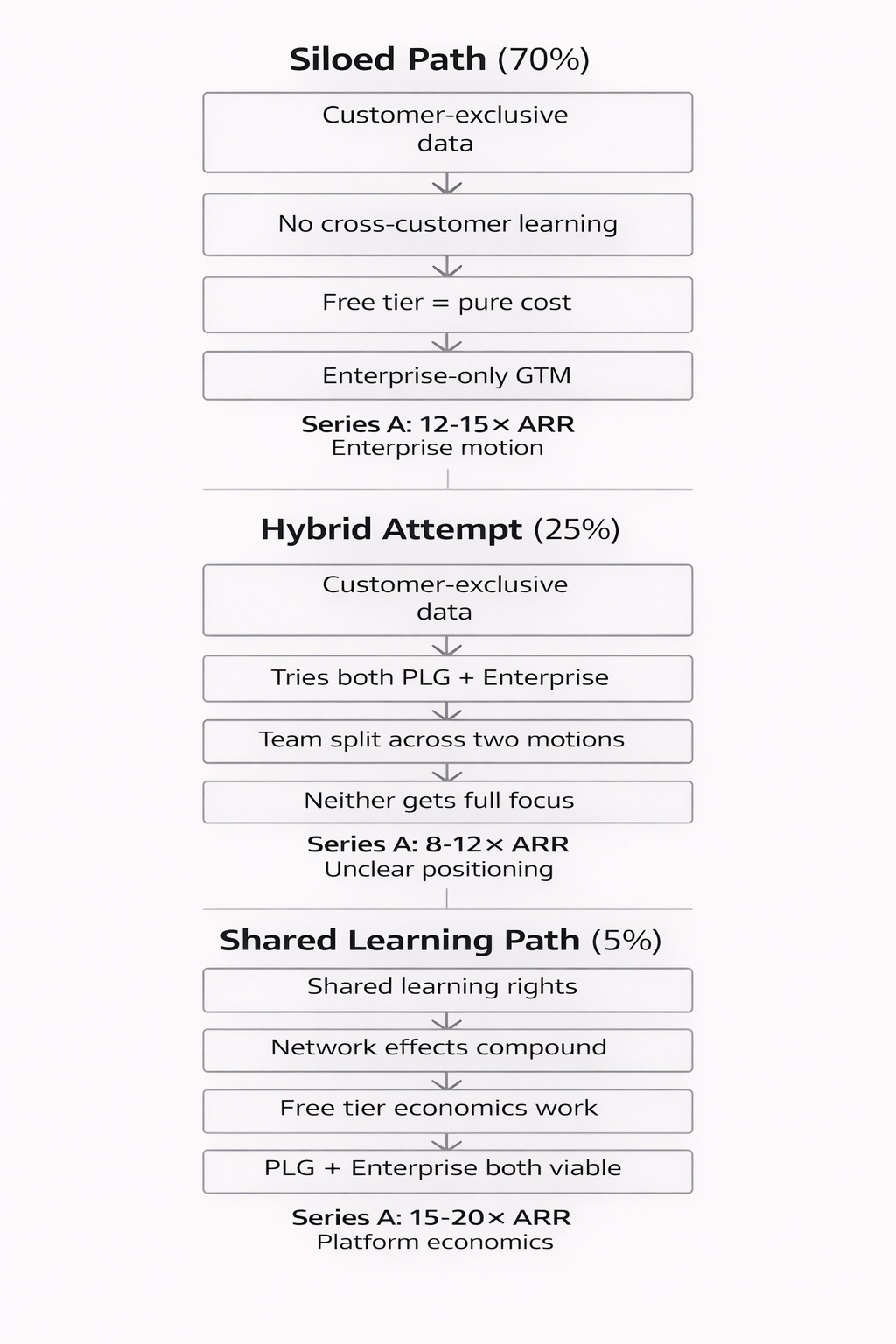
Fig 1. Execution Paths After the Data Custody Decision
Observable Signals & Checkpoints
Checkpoint 1: Q1–Q2 2026 (Months 29–35)
Signals to watch:
VP Sales or senior enterprise hire
VPC / on-prem deployment documentation
SOC2, SSO, audit logs appear
Pricing page launches
Sandbox de-emphasized in favor of demos
Interpretation:
Enterprise signals → base case strengthening
DevRel or growth hires → PLG attempt
Neither → unresolved tension
Checkpoint 2: Q3 2026 (Months 36–39)
Signals to watch:
Fortune 500 logos on homepage
Case studies with quantified ROI
Analyst mentions (Gartner / Forrester)
Developer testimonials or community emergence
Interpretation:
Enterprise proof → enterprise GTM consolidating
Developer-led adoption → hybrid or PLG path forming
Final Check: Q4 2026 to Q1 2027 (Months 40–42)
Signals to watch:
Series A announcement
Valuation multiple
Lead investor profile
Press narrative
Interpretation:
12–15× ARR → enterprise motion confirmed
15–20× ARR → PLG success
8–12× ARR → hybrid or unclear positioning
What Happens Next: Three Scenarios
Base Case (70%): Enterprise GTM Consolidates
Q1–Q2 2026:
VP Sales hire appears, VPC/on-prem deployment docs published, SOC2 certification completed
Q3 2026:
First enterprise case study published, Fortune 500 logos appear on homepage, /requestdemo becomes primary CTA
Q4 2026–Q1 2027 (Series A):
ARR: ~$800K–$1.2M
Valuation: 12–15× ARR
Lead investor: Enterprise SaaS specialist
Narrative: “AI-native engineering intelligence for large teams”
Hybrid Attempt (25%): Two Motions, One Team
Q1–Q2 2026:
VP Sales AND DevRel/growth hire, pricing page launches, mixed content (developer tutorials + executive insights)
Q3 2026:
Both enterprise deployments and self-serve trials active, messaging tries to serve both personas
Q4 2026–Q1 2027 (Series A):
ARR: $600K–$1M
Valuation: 8–12× ARR
Lead investor: Generalist or growth-stage
Narrative: Less crisp positioning
Operationally demanding at $5.95M seed scale
PLG Breakthrough (5%): The Falsification Case
Q1–Q2 2026:
Self-serve repo connection launches, real free tier with meaningful code analysis, pricing page with transparent tiers
Q3 2026:
Developer testimonials spread organically, IDE integration announced, bottom-up adoption visible
Q4 2026–Q1 2027 (Series A):
ARR: $1M+
Valuation: 15–20× ARR
Lead investor: PLG-focused firm
Narrative: “Developer-first engineering intelligence”
If this emerges, the core thesis is falsified.
Falsification Criteria
PLG succeeds anyway → economics assumption wrong
Cross-learning revealed publicly → inference wrong
Hybrid scales cleanly → complexity overstated
Incumbents absorb category → selection thesis incomplete
What This Tests
Two structural claims:
Did early data custody choices quietly remove PLG as an option?
Current inference: Yes (60% confidence)Can GTM outcomes be inferred before the company commits?
Current inference: Enterprise gravity is strong (70% confidence)
If the base case holds, it reinforces a core Operator Hypotheses claim:
Architectural decisions made under early enterprise pressure can determine GTM destiny long before anyone realizes the door has closed.
Final Check: January 2027 (Month 41)
By then, the path will be visible.
Either the hypothesis holds - or it breaks.
Both outcomes are valuable.
References
Peng et al. (2023). The Impact of AI on Developer Productivity. https://arxiv.org/abs/2302.06590
GitClear (2024). Coding on Copilot. https://www.gitclear.com/coding_on_copilot_data_shows_ais_downward_pressure_on_code_quality
Flux (2023). Subscription Services Agreement. https://askflux.ai/eula
Flux Blog. https://askflux.ai/blog
Flux Sandbox. https://sandbox.trial1.askflux.ai
Flux Product. https://askflux.ai/product
Analysis Date: January 2026
Next Review: January 2027
Not investment advice. This is live pattern research.
Pattern tracking:
Pattern #1: Research Grid (Month 11) - Services trap prediction - Check-back April 2026
Pattern #2: DatologyAI (Month 25) - Services trap verification - Check-back October 2026
Pattern #3: Chai Discovery (Month 20) - Compound fork effects - Check-back October 2026